
Fridays For Future, from Hope to Absence: Transformation in protest dynamics


Giulia, 21, studies international relations and volunteers for the humanitarian NGO Caritas. She has seen with her own eyes the effects of climate change: “Floods in Italy are getting worse every year.” Her commitment to environmental issues began with the 2019 climate strikes, and that same year, she became a vegetarian. “It felt like something big was starting,” she recalls. “We were part of a movement that everyone was talking about.”
Tilda, now 19, grew up in a middle-class neighbourhood in Berlin. Currently, she volunteers as a cook in a solidarity kitchen. For her, joining the marches felt natural. “When I was that age, I did it because everyone else was doing it; it was the popular thing to do,” she explains. Today, she still worries deeply about her future, but expresses it differently: “I think there is a pressure because it’s regarding my future. So, I need to take some action.”
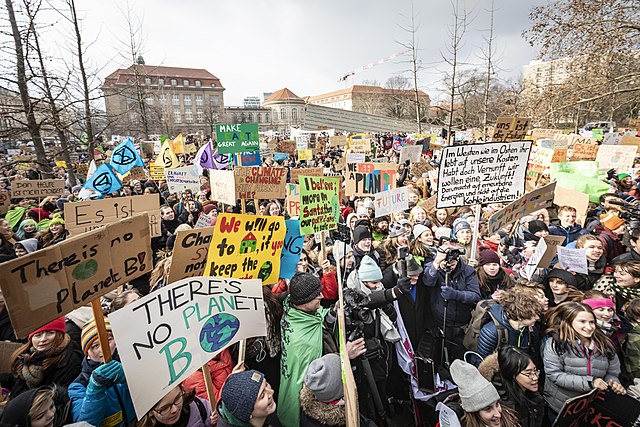
Both agreed that collective climate action represented a contribution to the international fight against climate change. However, after those demonstrations, neither of them has ever attended another climate strike.
In 2019, thousands of young people flooded the streets shouting, “There is no Planet B.” Six years later, those voices have largely faded. While the effects of the climate crisis become increasingly unsettling, eco-anxiety remains a significant concern, and political efforts appear to stagnate, even though discontent is far from disappearing.
From Collective to Individual Activism
A favourable context fueled the worldwide wave of activism in 2019. Greta Thunberg became an easily relatable figure, inspiring solidarity around the world. But only a year later, the COVID-19 pandemic arrived. Although activism moved online, mobilisation came to a standstill. Its popularity kept shrinking afterwards, as other crises dominated headlines: the war in Ukraine, inflation, the cost-of-living crisis, and now Palestine.
As Giulia put it: “When the protests stopped appearing in the news, I stopped going too.”
For both Tilda and Giulia, collective activism slowly gave way to individual practices: buying fewer clothes, eating less meat, using less plastic, or spending less. “I think there is a pressure because it’s regarding my future,” Tilda says. “So, I need to take some action.”
These personal gestures became their way to cope with uncertainty and guilt, but they also marked a shift, from shared protest to solitary effort, from public spaces to the digital ones. Giulia describes how social media reinforces that “I follow people who think the same as me … The Instagram algorithm gives you what you want to see, so maybe I’m just in my little homemade circle… but it helps me feel encouraged.”
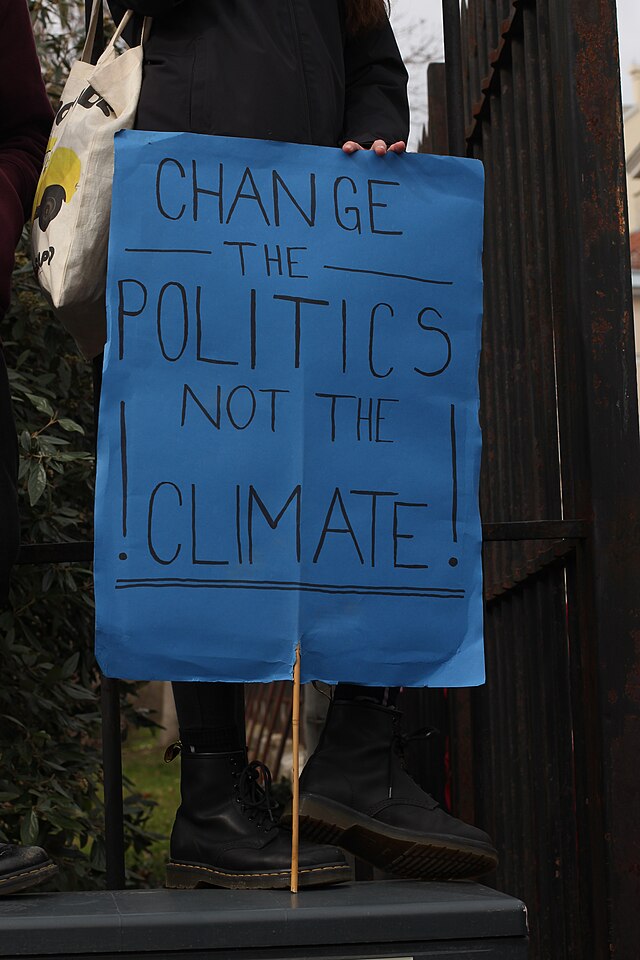
Why Did Collective Mobilisation Fade?
Historian and climate crisis researcher Ángel Sanjuan believes this disengagement stems from a crisis in environmental discourse itself. “The repertoire of protest kept alive the old division between nature and society,” he explains, “as if the environmental crisis were detached from social and economic issues such as the cost of living, housing, or local biodiversity loss.”
By assuming that ecological demands are “fair and noble enough to convince everyone,” the movement, he argues, risks sounding detached from ordinary people’s struggles.
Political inconsistency has also damaged credibility. The German Greens’ support for reopening coal mines is a clear example of how “the political rentability is sinking the discourse’s reliability.” This dissonance reinforces the idea that environmentalism is a distant, elitist agenda. “They (political institutions) are not doing what they have to do,” Giulia notes. “They just want to get votes, and young people are not enough to be politically worth it.”
Lastly, the movement has wrongly identified “consumers” as its main target. By focusing on individual behaviour rather than systemic change, it generates guilt and paralysis. Many young people internalise this responsibility, and instead of empowerment, they feel frustration: “They are adultified children, trying to take on the responsibilities of adults, but they are still children at the end of the day…” (Isaiah et al., 2022, sec. 3.1).
Eco-Anxiety and the Paradox of Concern
According to the environmental journalist Irene Baños, eco-anxiety is a complex of emotions that responds to the situation of climate and ecological crisis. It often combines powerlessness, sadness, guilt, and frustration.
Sanjuan argues that this sense of guilt has largely contributed to the disengagement of young people, mainly because of its paralysing effect. The fear of an unlivable future collides with the failure of public institutions and the profit-driven priorities of companies, leaving many with the feeling that meaningful change is out of reach.
Yet, standing still is also unbearable. As Tilda puts it: “There is also pressure because I know that if I don’t do small actions, even though they are small, then my future is not going to be my future.”
For Sanjuan, “the ranks of ecological activism are mostly made up of young people driven by social justice concerns or feelings of guilt, rather than by the direct victims of the ecological crisis.” This raises the question: who are these absent victims?
The absent victims and the far-right
“Those who are harmed the most are not the ones who are striking the most about the climate crisis,” says Sanjuan. In fact, those are the ones that are unable to connect their ordinary struggles with the broader deconfiguration of ecological relations. This lack of comprehension leads to a misperception of policymaking. For instance, people in rural areas feel that regulations imposed above threaten their jobs and way of life. Even if these measures aim to protect the planet, they are often perceived as unfair and detached from local realities, a fact evident in the recent series of farmer crises in the EU, as Jon Henley and Sam Jones, journalists of The Guardian, could verify when working on their article.
Giulia shares a similar concern: “In Italy, they’re not against it; they just don’t want to talk about it.” Preoccupation should arise from that silence, because while environmental institutions speak a technical language of regulation, populist narratives speak to emotions: fear, fatigue, belonging. And they are winning the attention battle.
As a result, those most exposed to climate change might end up listening to more extreme discourses that promise protection and stability. These movements present themselves as defenders of “ordinary people” against so-called “urban green elites.”
Tilda reflects: “One reason for the increase of the far-right can be all the crises that are happening around the world. People tend to be more extreme to have something they can hold on to.”
Media Fatigue and the Digital Battlefield
In recent years, the media has increasingly portrayed climate activism as disruptive or even criminal. Acts of civil disobedience, like glueing oneself to the floor or throwing soup at paintings, have sparked backlash. As a matter of example, the latter contracultural expression, in countries like Spain, is covered by the Criminal Code as vandalism and can cost up to 3 years in prison. This,” says Sanjuan, “is a systemic reaction of fear against the rupture of the establishment.”
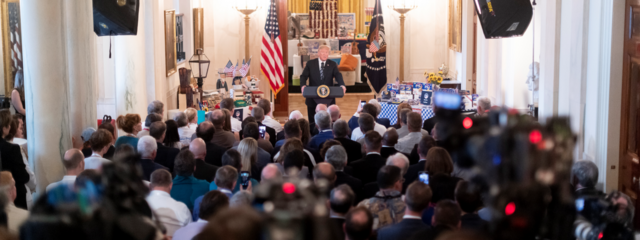
At the same time, media and social networks feed on outrage. Indignation guarantees visibility and digital traction; a mechanism that populism knows how to use well. “Indignation is addictive,” Sanjuan explains. “It keeps audiences scrolling, consuming, reacting.” A strategy largely applied by the most viral President of the US, with more than 15 million followers, Donald Trump, who uses his social media to spread messages such as categorising climate change as “the greatest con job ever perpetrated on the world”.
Social networks, however, are not necessarily hostile spaces. They also allow for new forms of belonging. As Giulia explains, “Maybe I’m just in my little circle, but it keeps me hopeful.” Her words show how online activism, though limited, has become a personal refuge in times of disconnection.
Towards New Ecological Expressions
Giulia’s and Tilda’s everyday practices reveal a broader transformation, vegetarianism, low consumption, and transportation means, conscious use of social media. In fact, these small choices reflect a tendency among young people to translate global concerns into personal ethics.
Although Fridays for Future seemed a movement of rupture, it might instead have been, as Sanjuan notes, “an adaptation and comfortable shift of the environmental movement.” However, this evolution is not an end, but a warning. “Environmentalism must renounce its urban bias and connect with the true victims of the ecological crisis,” he says.
Yet, both Tilda and Giulia still believe in the value of acting together. “Every time I go on strike, I feel part of something,” Tilda says. “It gives me hope because I see other people fighting for the same reasons as I am.”
In the end, as Sanjuan concludes, “Don’t rely exclusively on values. Organise collectively. Convince.”
References:
- Isaiah, T., Martín, A., Wicker, A., & Laelia, B. (2022). Understanding youths’ concerns about climate change: a binational qualitative study of ecological burden and resilience. Child and Adolescent Psychiatry and Mental Health, 16, Article 51. https://doi.org/10.1186/s13034-022-00551-1
- Baños Ruiz, I. (2022). Ecoansiedad: de la parálisis a la acción climática y ambiental. Papeles de relaciones ecosociales y cambio global, 160, 79–90. https://dialnet.unirioja.es/servlet/articulo?codigo=8782936
- García Amaro, E. (2022, noviembre 6). ¿Cuáles son las penas y multas por dañar una obra de arte en España? Esto dice la ley. Onda Cero. https://www.ondacero.es/noticias/sociedad/cuales-son-penas-multas-danar-obra-arte-espana-esto-dice-ley_202211066367b29ebf23cd000167e1a7.html
- Henley, J., & Jones, S. (2024, February 10). They’re drowning us in regulations: how Europe’s furious farmers took on Brussels and won. The Guardian. https://www.theguardian.com/environment/2024/feb/10/theyre-drowning-us-in-regulations-how-europes-furious-farmers-took-on-brussels-and-won